Should you Visit Japan or South Korea First?
Two of the most known countries in East Asia
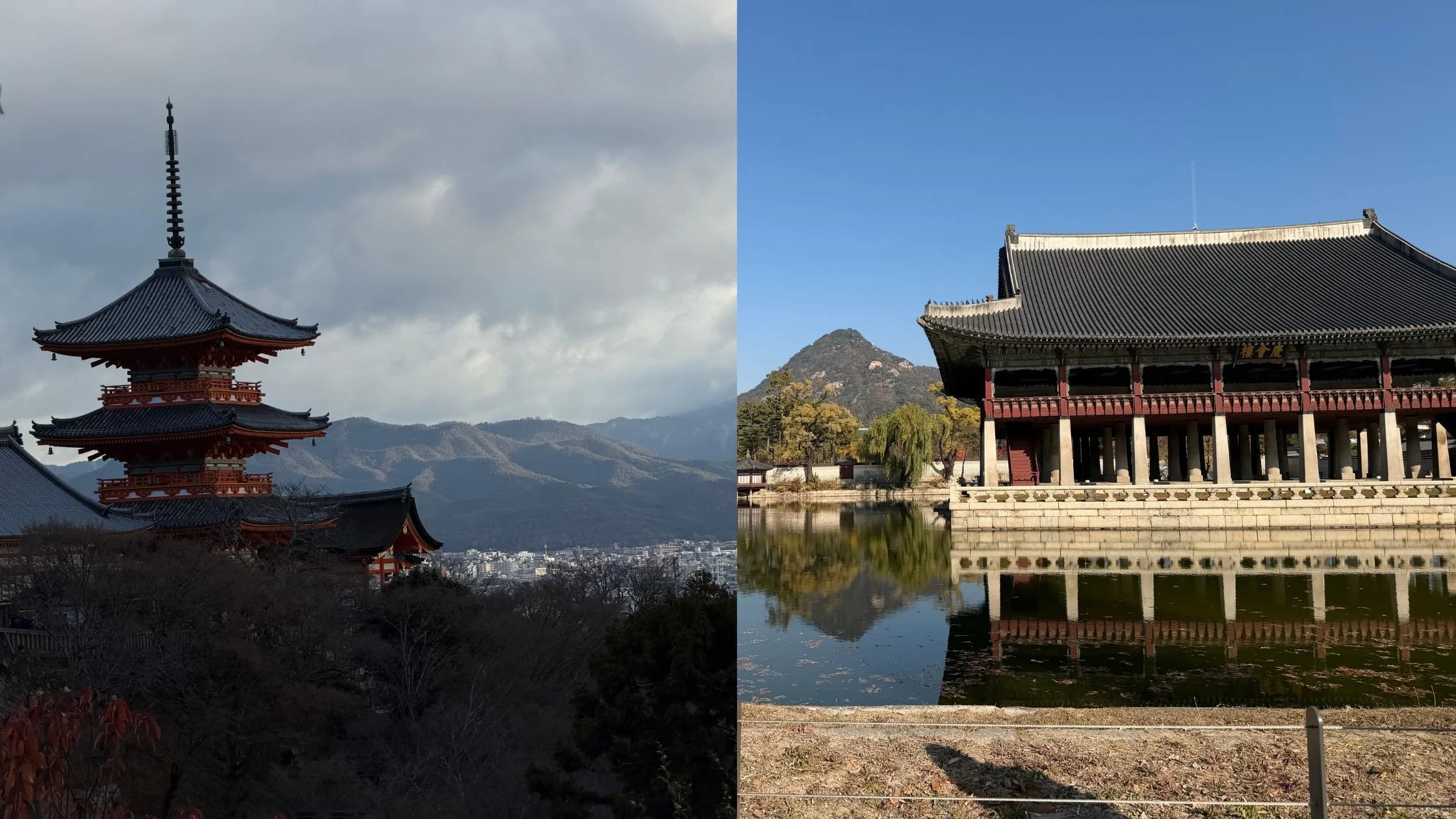
(Left side) A pagoda in Kyoto, Japan; (Right side) One of the pavillons in Gyeongbokgung Palace, Seoul, South Korea
Japan and South Korea are two of the most renowned countries in East Asia, both have an abundance of culture that is widely represented in global pop culture. You’ve probably heard of Japan’s anime and South Korea’s K-pop—but what they’re actually like when you travel there can feel very different.
Both countries can appear similar on the outside, but once you’re there, the day-to-day experience, social norms, and overall feeling are not the same.
So if you’re choosing between the two: which country should you visit first?
Verdict: Visit Japan First
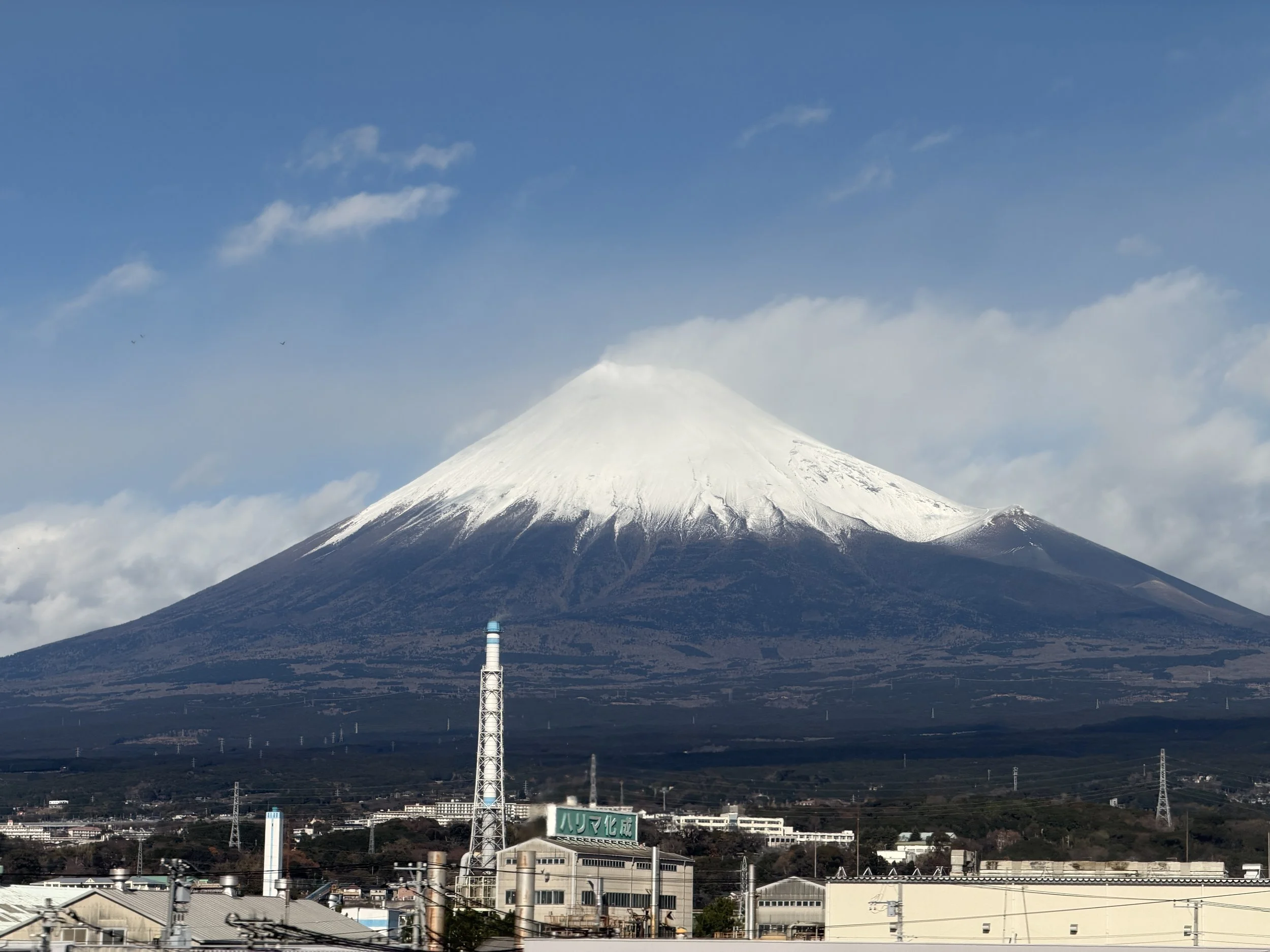
Mount Fuji, Japan
Why? Because Japan is very structured and strict in its way of being. Going there first helps you adjust to things like social rules, quiet public spaces, food etiquette and the general way people move through society (which is similar to South Korea).
If you then go to South Korea, it will feel less strict, meaning you’ll notice more spontaneity and more visible unrefined moments in everyday life (like taxi drivers honking and even shouting at each other).
If you want to visit both countries, starting with Japan will make South Korea feel much easier to adapt to afterward.
One thing to keep in mind: the subway system in Japan can be very complex (especially if you rely on Google Maps). Give yourself extra time when navigating it, especially in cities like Tokyo. You might end up going in the wrong direction for 20 minutes because the next stop wasn’t clearly indicated before boarding.
Rideshare apps like Uber are also very expensive in Japan, so you’ll likely rely on public transportation daily.
Similarities Between Japan and South Korea
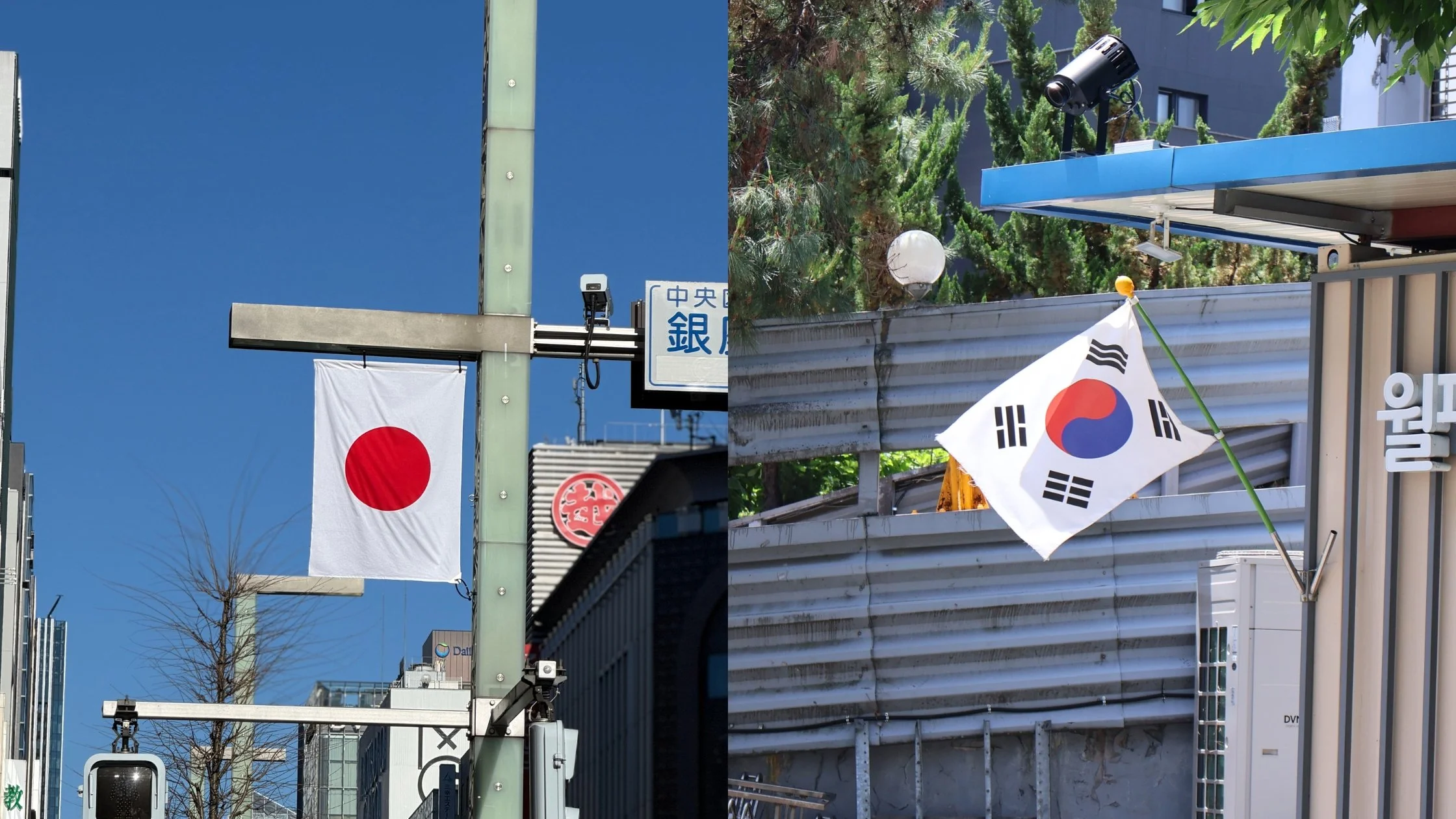
(Left) Flag of Japan; (Right) Flag of South Korea
In both countries, jaywalking is almost nonexistent during the day. People will stop immediately if the pedestrian light turns red, even mid-step. At night (especially after drinks), this becomes more relaxed as people go out with friends and work colleagues and social rules are not really followed.
There is a lack of public trash cans in both countries, which can be surprising at first. You can find trash cans in convenience stores and restrooms.
Late-night shopping is common in both places. In Japan, stores like Don Quijote are open 24/7, while in South Korea, areas like Dongdaemun can stay open until 5 AM. If not, many stores close around 10 or 11 PM.
In clothing stores, you may need to remove your shoes in dressing rooms. This is much more common in Japan, where it can feel like almost every store requires it. Also, both countries provide face covers if you’re wearing makeup so that you don’t stain clothing, which is something that’s not common in other parts of the world.
Both countries have high-speed trains which makes it convenient to travel across the country.
Also, almost all subway stations have luggage lockers, so, you don’t need to drag all of your luggage with you if you’re just stopping by in a city to do some shopping.
Buddhism is present in both countries, although Japan also has a strong presence of Shintoism reflected in its shrines and architecture.
Language Experience
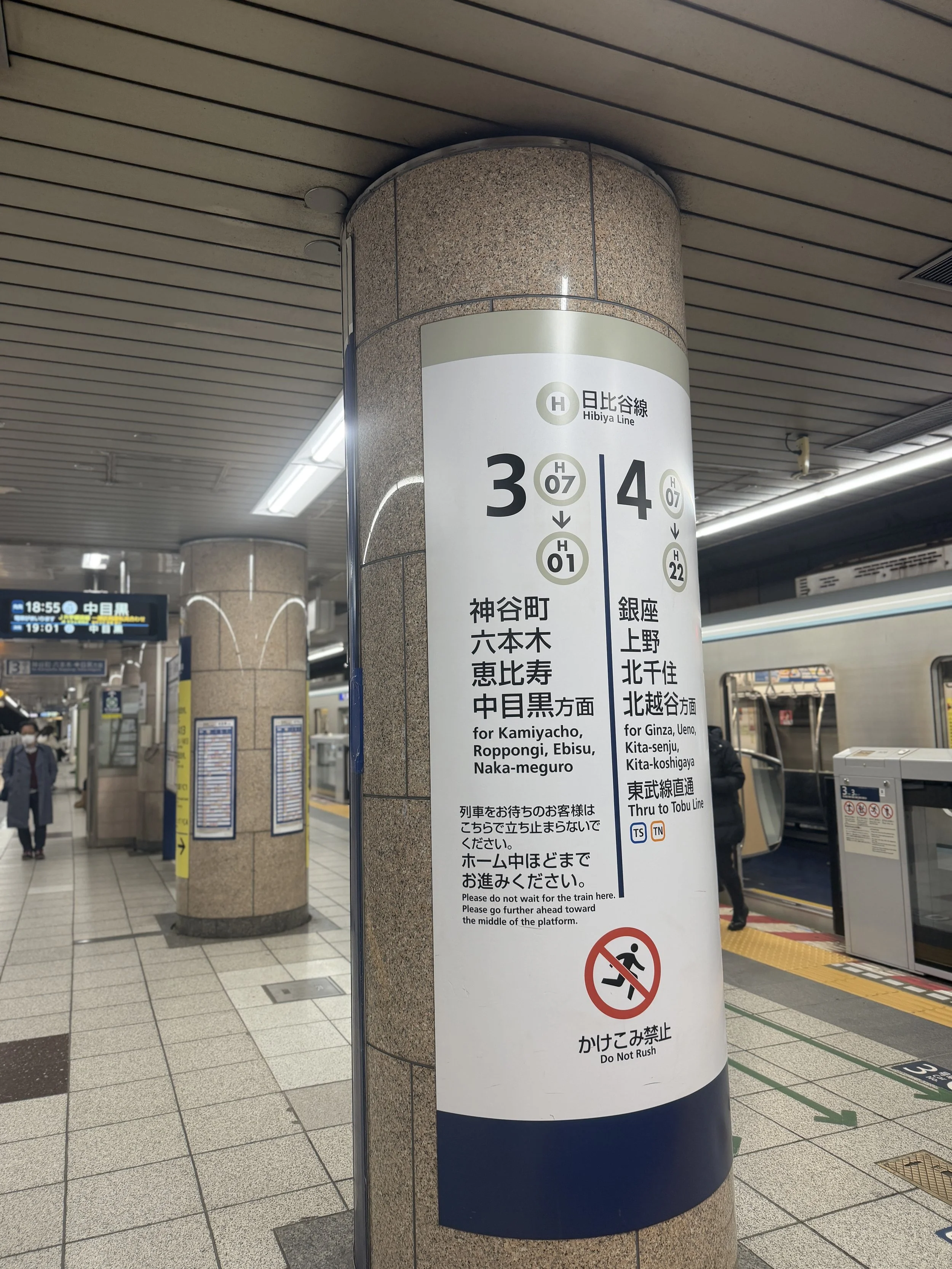
A subway station in Tokyo, Japan
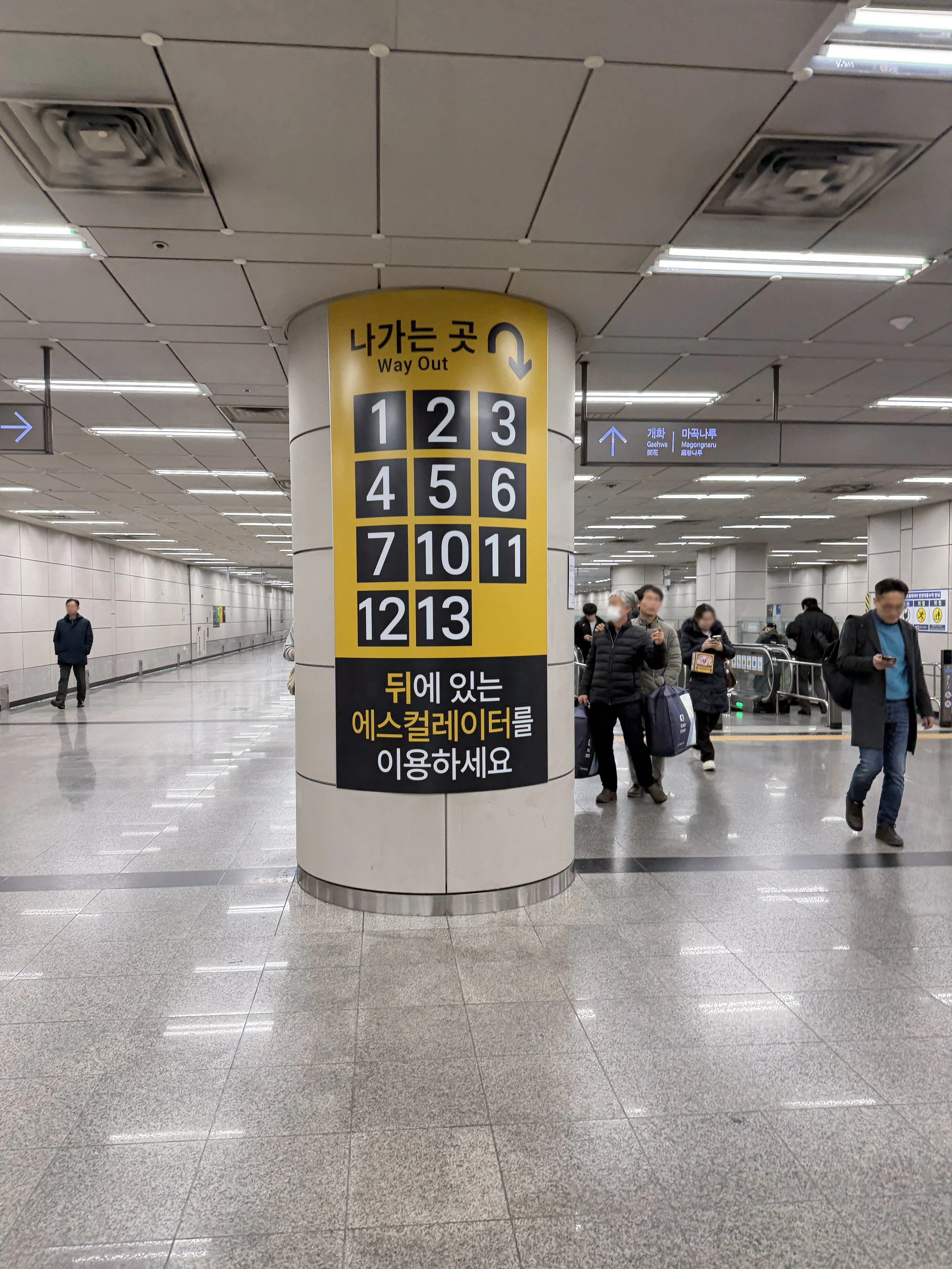
A subway station in Seoul, South Korea
Both Japan and South Korea have English translations available in major tourist areas, but once you leave these areas, and go to places like the countryside or less known neighbourhoods, the amount of English translation (such as on menus and in subway stations) tends to decrease. In these areas, you might need to rely more on translation tools if yo do not read the local language.
That said, in Japan, subway announcements are usually only in Japanese and English, whereas, in South Korea, subway announcements are often always made in Korean, English, Japanese and Mandarin.
Convenience stores
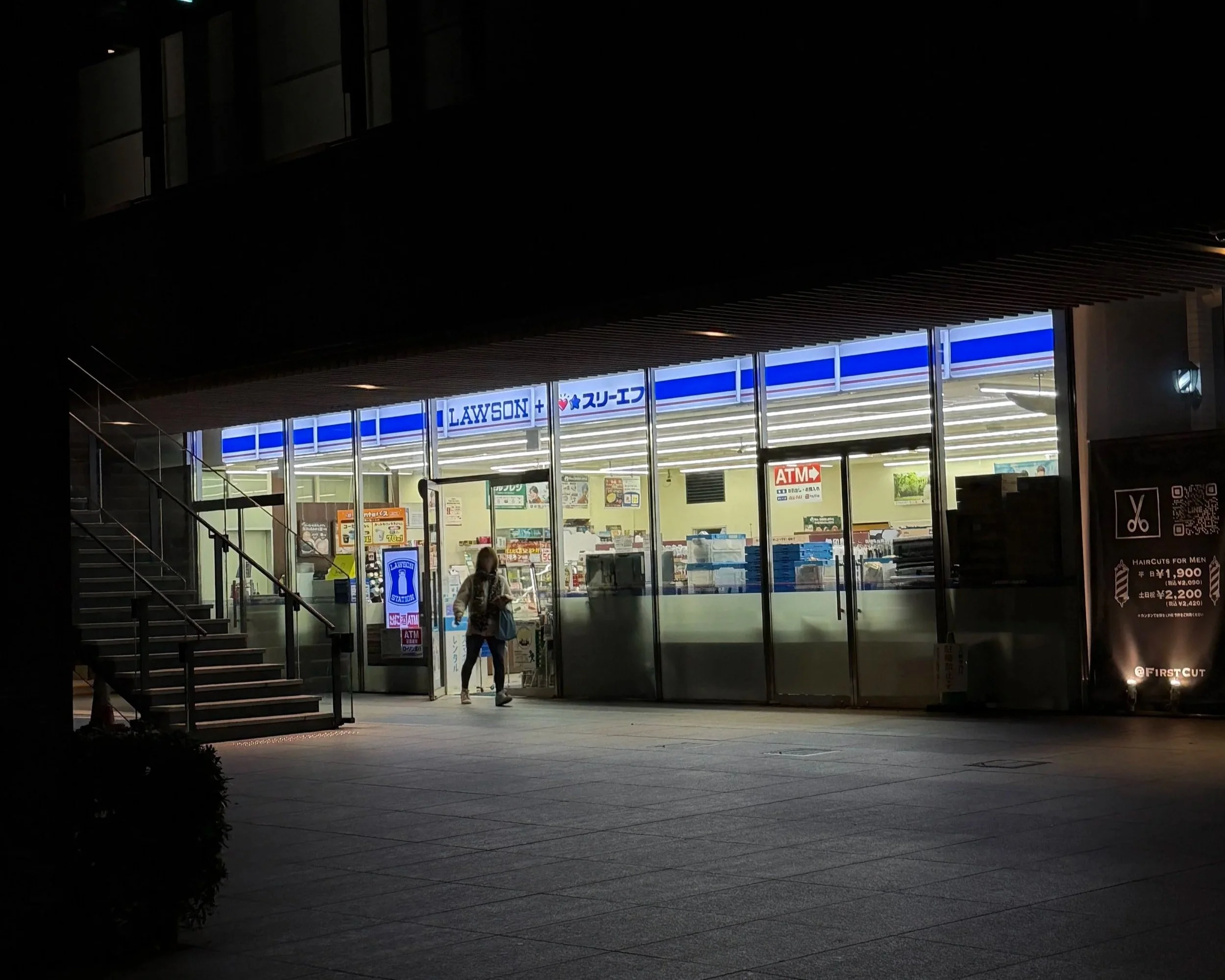
A Lawson convenience store in Japan
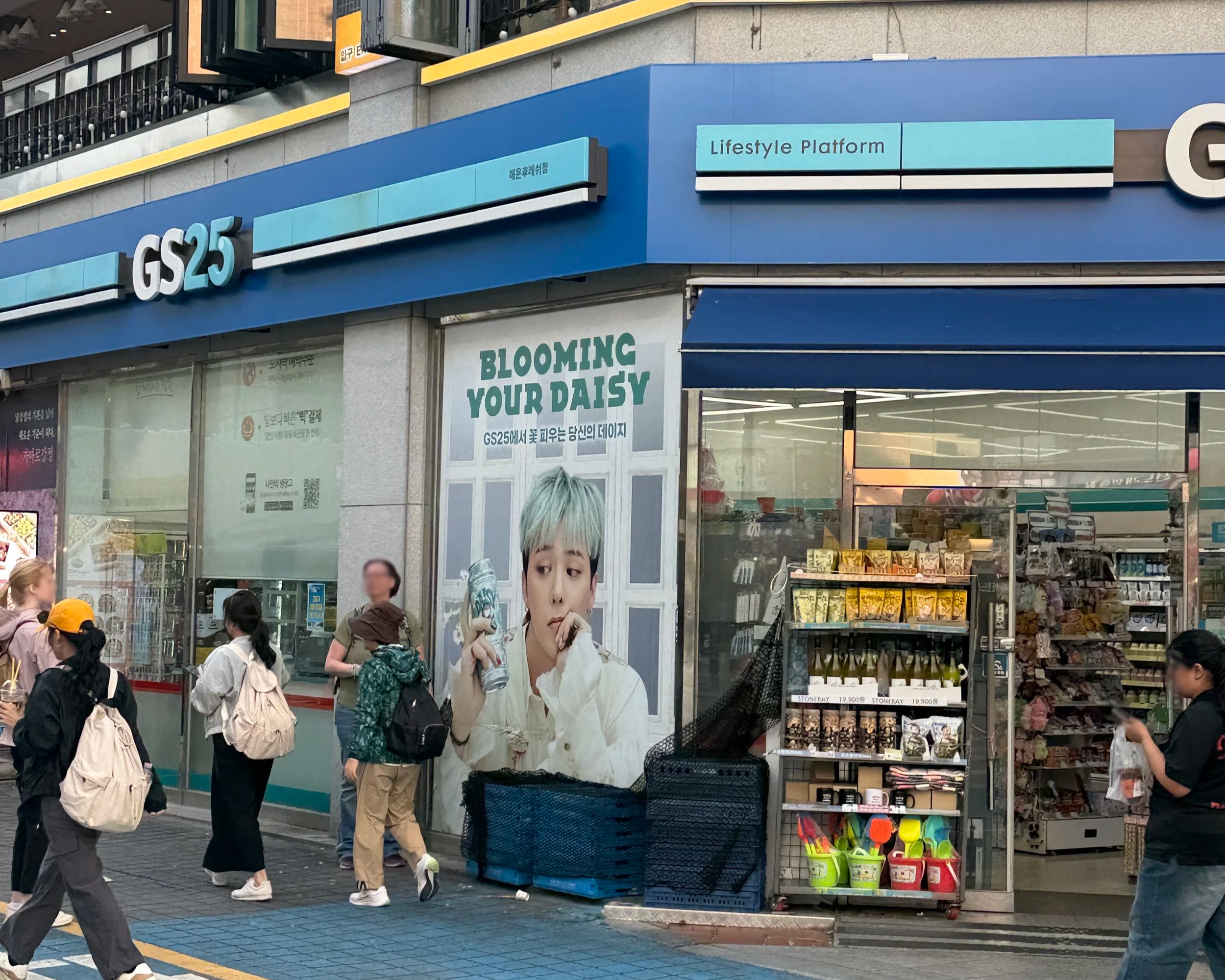
A GS25 convenience store in South Korea
Both Japan and South Korea have convenience stores in abundance. If you are in a major city (or even in the countryside), you likely won’t go a single day without crossing by a few convenience stores. Most of these convenience stores are open 24/7.
In Japan, the major convenience stores are Lawson, FamilyMart and 7-Eleven. I have found all the ones that I visited were open 24/7, however, you may run into some that are not.
In South Korea, the major convenience stores are CU, GS25, as well as 7-Eleven. Most are open 24/7, but I have run into a few—especially in the outskirts of Seoul—that close before midnight or switch to a no-employee format where you need to verify your identity or scan your credit card before being allowed to enter the store and do a self-checkout. This can become complicated if you’re a tourist and don’t have a South Korean identification number.
Accommodations
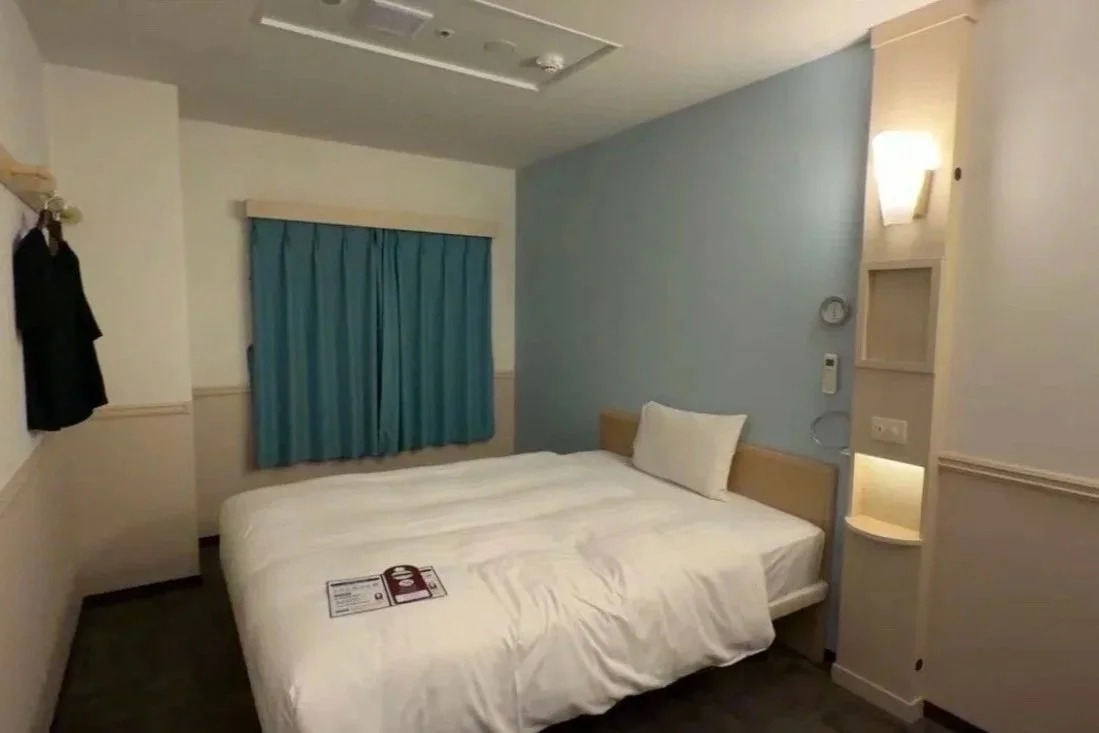
Japan-style hotel in Daegu, South Korea
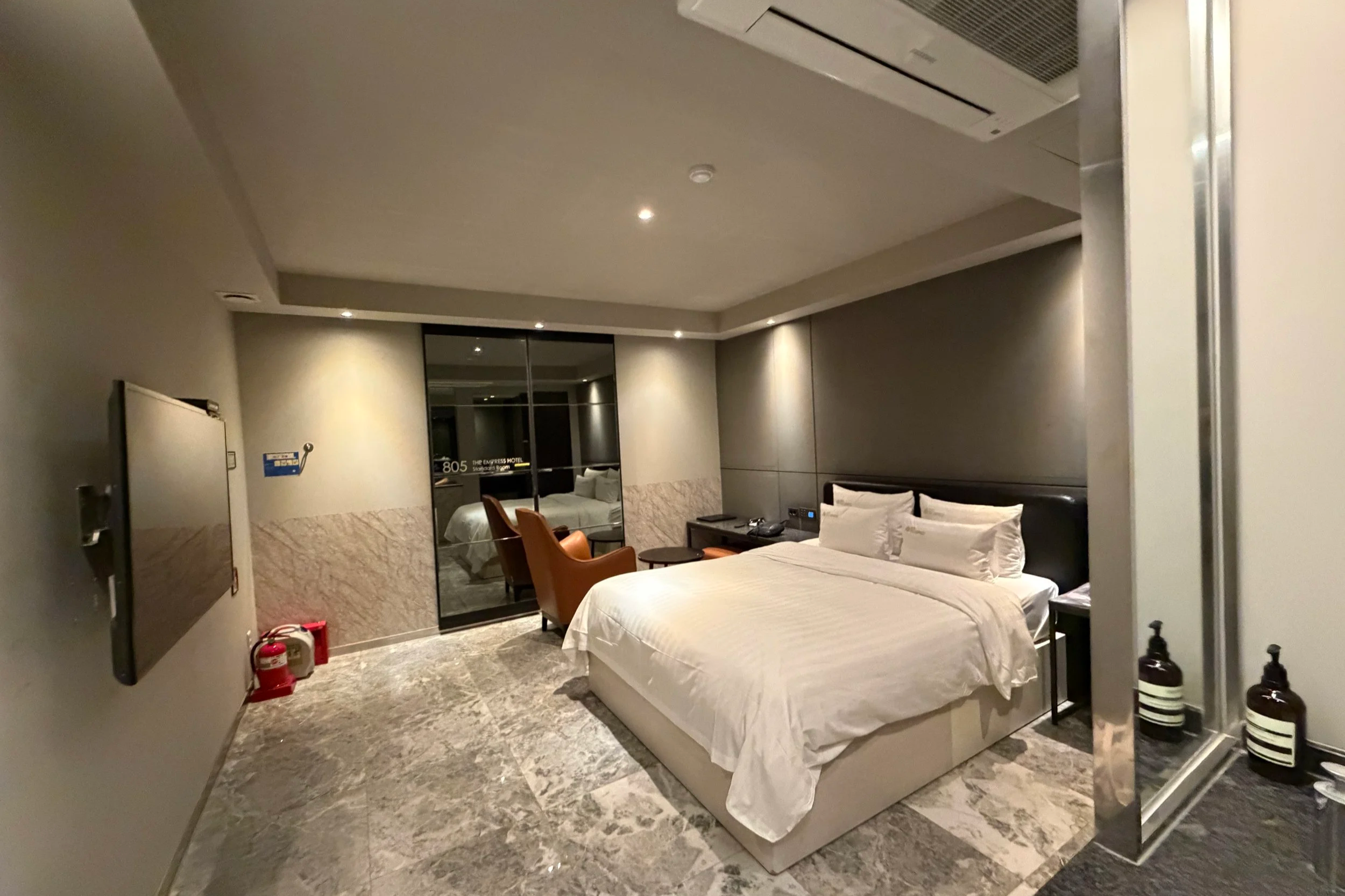
Hotel room in Daejeon, South Korea
Budget hotels and hotel rooms in general are very small, often around 12 to 20 square meters. Bigger hotel rooms will be much less expensive in cities other than major cities such as Tokyo and Osaka in Japan, and Seoul and Busan in South Korea.
Hotels in Japan are very strict about checkout times, which are usually around 11 AM. Some may even call your room about 10 minutes before checkout to remind you to check out. If you check out late, you’ll likely have to pay a fee.
However, if you ask in advance, arranging a late checkout is usually not a problem—they just need to ensure that the room can be prepared in time for the next guest.
Washlet toilets (toilets with a bidet inside) are extremely common in both places (even in public places like shopping malls). These include features like bidets, heated seats, toilet seat cleaner and even noise or deodorizing functions.
For accommodations in the capital cities:
In Tokyo, I recommend staying in Ikebukuro. It’s more affordable and just a 15–20 minute ride from major neighborhoods like Shinjuku and Shibuya.
In Seoul, Jongno (종로) is a great choice. Accommodation tends to be cheaper while still being in a lively neighborhood, close to major neighbourhoods such as Myeongdong and Dongdaemun, and with easy access to the subway.
Food
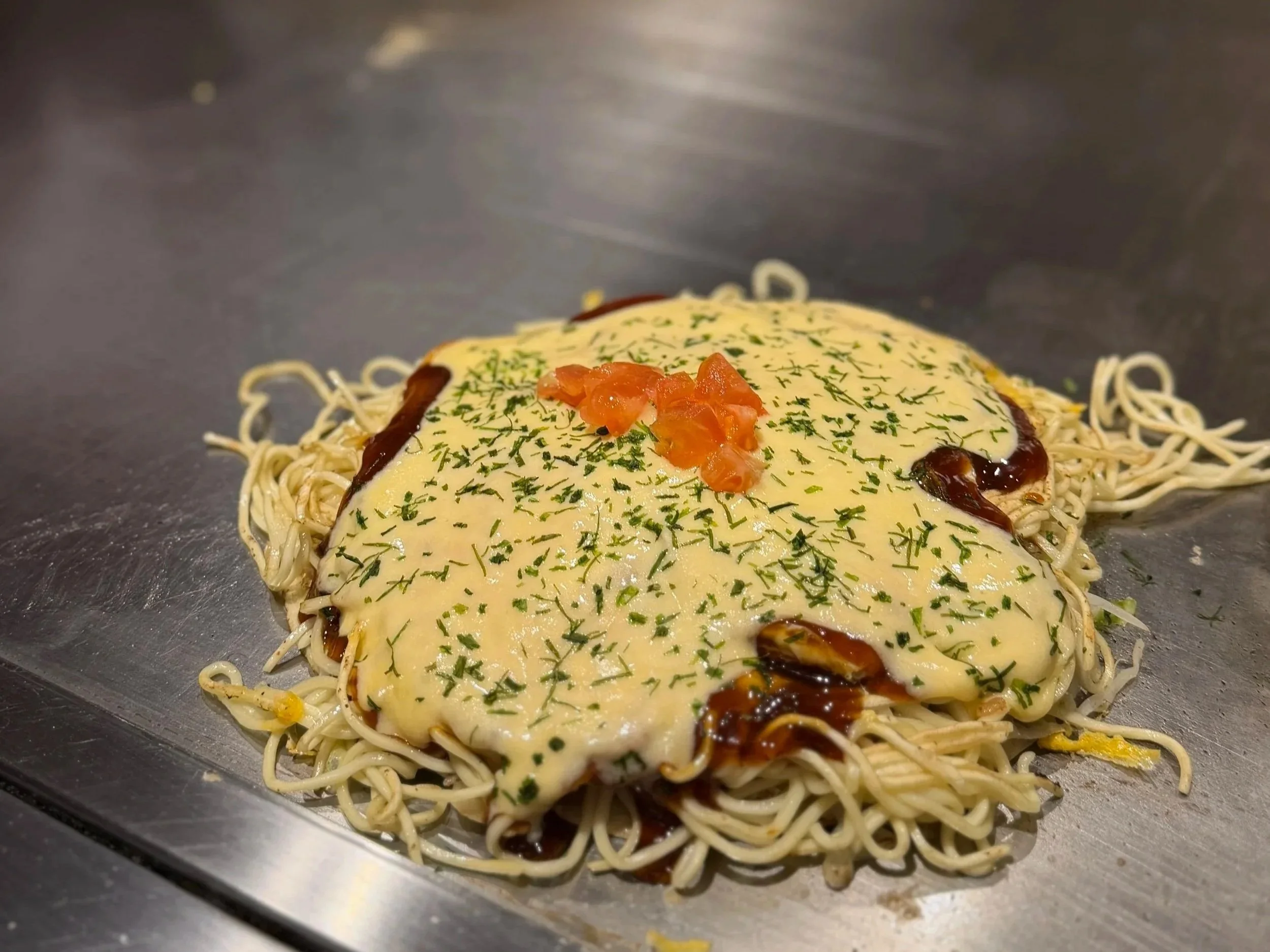
Hiroshima-style okonomiyaki, a Japanese dish
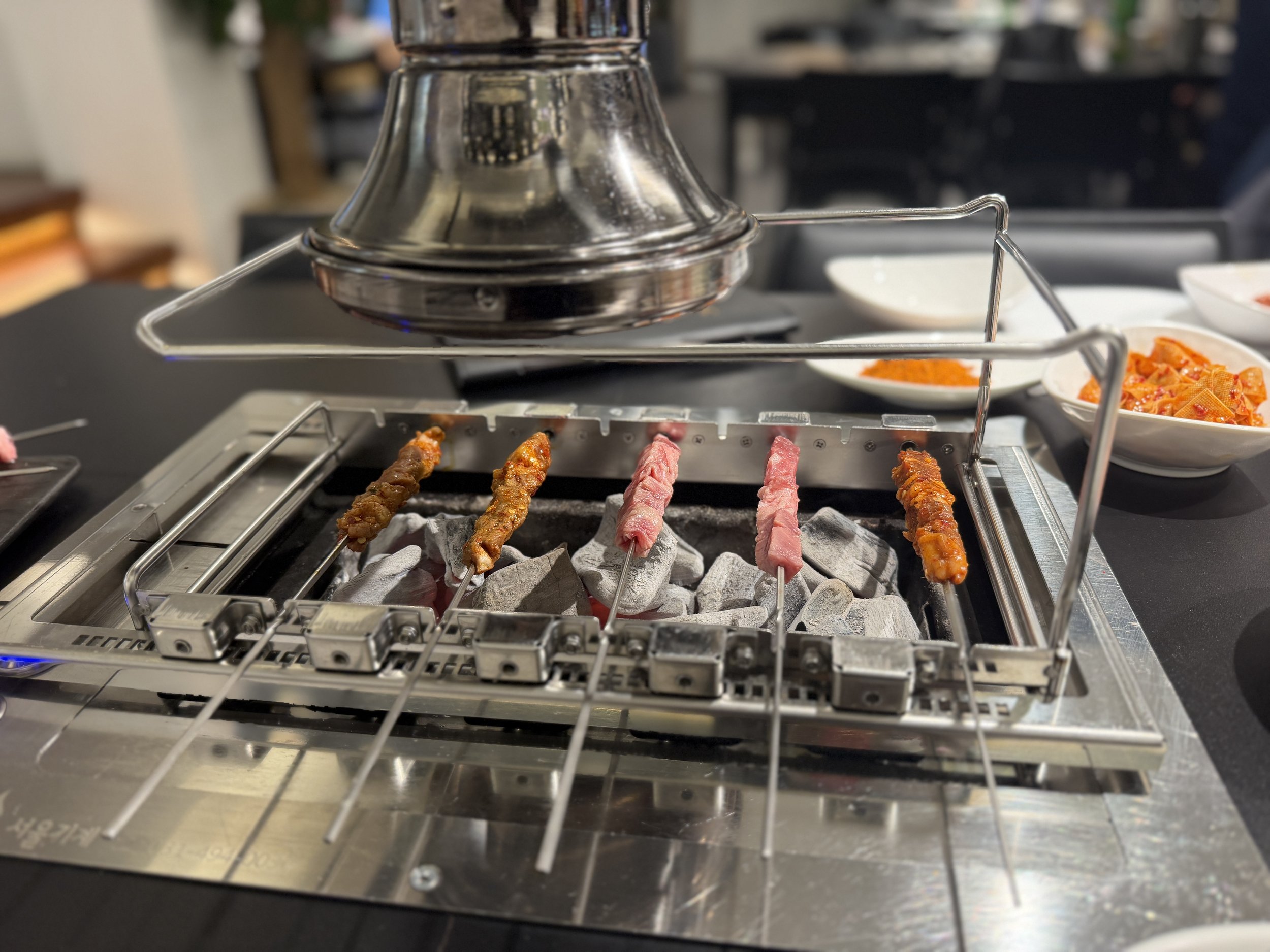
Lamb skewers (양꼬치) in a restaurant in South Korea
There is also a shared culture of eating and drinking together, especially after work. In Japan, this often takes place in izakayas, while in South Korea, it’s commonly experienced at most restaurants that serve any type of grilled meat.
In both countries eating on public transportation (except when on a train between cities), is generally prohibited.
Price
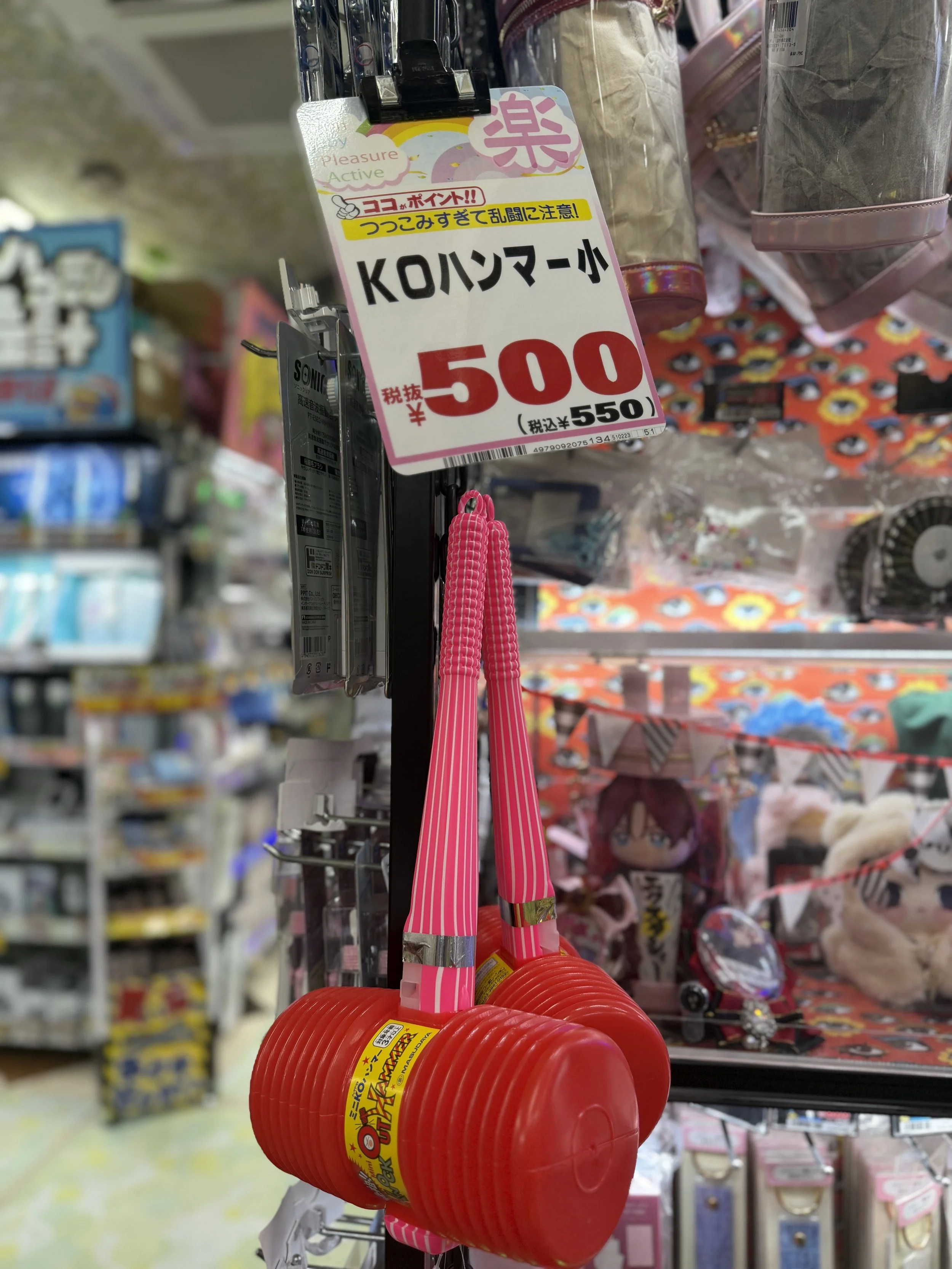
A hammer toy for ¥500 inside a Don Quijote store, in Japan
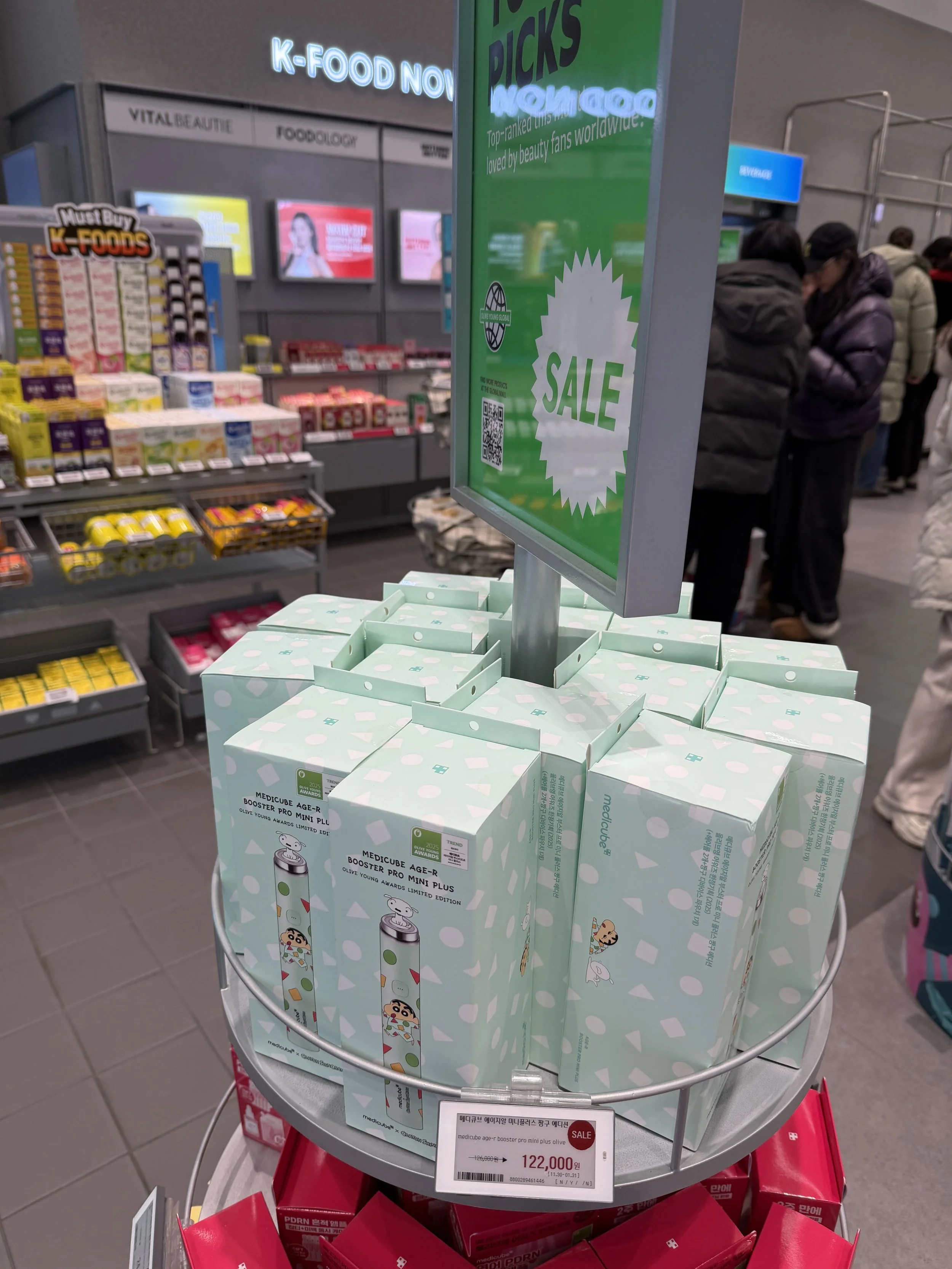
Beauty products for ₩122,000 inside an Olive Young store in South Korea
Both destinations can be either affordable or expensive, depending on what you buy and where you go.
In South Korea, areas like Seongsu and Gangnam tend to be more expensive, while places like Namdaemun and Paju Art Village are more budget-friendly.
In Japan, Ginza is known for luxury shopping, whereas areas like Harajuku and Shinjuku offer more affordable options.
Differences Between Japan and South Korea
Overall Feeling
Japan can feel very quiet, structured, and introspective. When you walk in a Japanese city, you blend in and move through spaces almost invisibly, even if you’re visibly a foreigner.
South Korea can feel more energetic, social, and spontaneous. If you’re visibly a foreigner, locals will likely be more aware of you and stare at you out of curiosity.
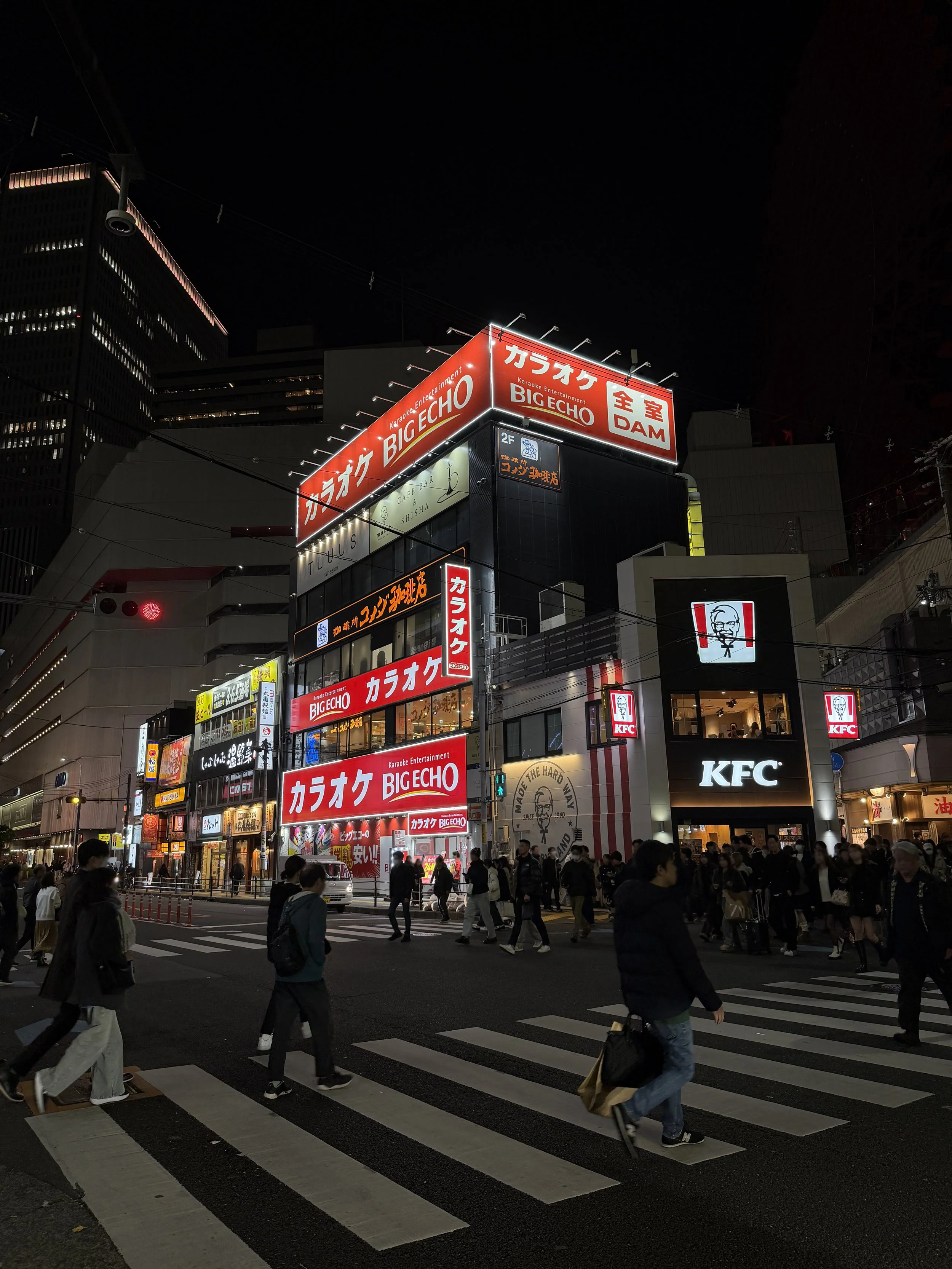
Osaka, Japan
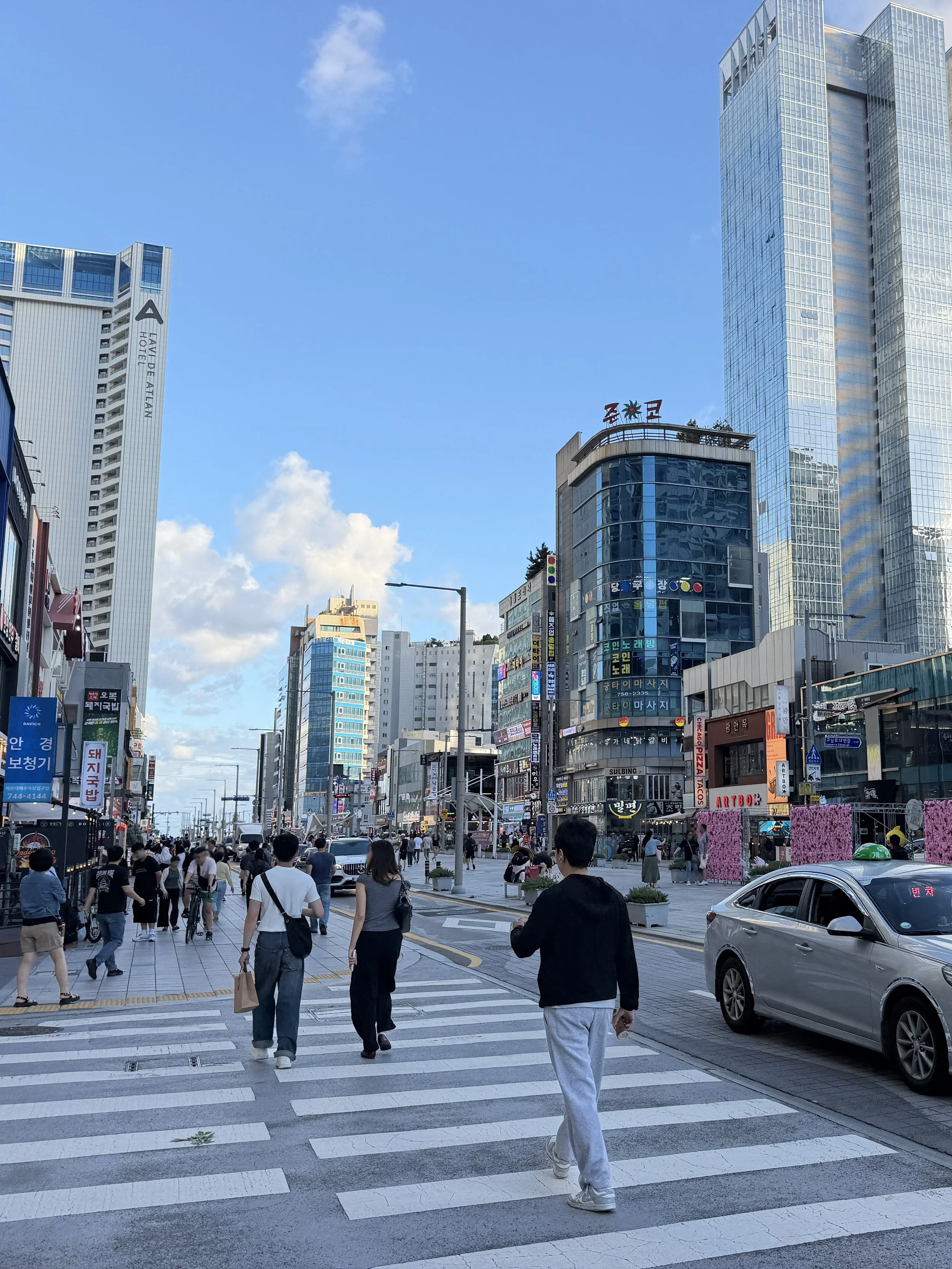
Busan, South Korea
Everyday Behavior and Social Norms
In Japan, people express less emotion in public. Talking on trains or subways is generally frowned upon, and eating somthing while walking is discouraged.
Some subways and stations even have signs prohibiting talking or eating. If you’re unsure, observe the people around you—most will eat in one spot rather than on the move, and they generally remain quiet while on public transportation.
Japanese people are also often very reserved towards strangers and may not go out of their way to help you if it’s not part of their job. For instance, I once asked an ice cream store worker (using translated text on my phone) where the elevator was in a subway station, and they said that they couldn’t help me. However, when it is part of their job, they will often go above and beyond. A hotel receptionist once rearranged reservations so that I wouldn’t have to change rooms after extending my stay in the hotel.
In South Korea, people are more expressive. For example, taxi drivers and food stand workers may shout amongst each other, which can actually be entertaining to witness. Talking in public spaces and on transportation is more common, and eating something while walking is usually completely normal.
Koreans are also reserved in some ways, but it’s often easier to strike up a conversation, especially with workers. You’re more likely to be noticed as a foreigner and asked questions about your life in a friendly way.
Eating Culture
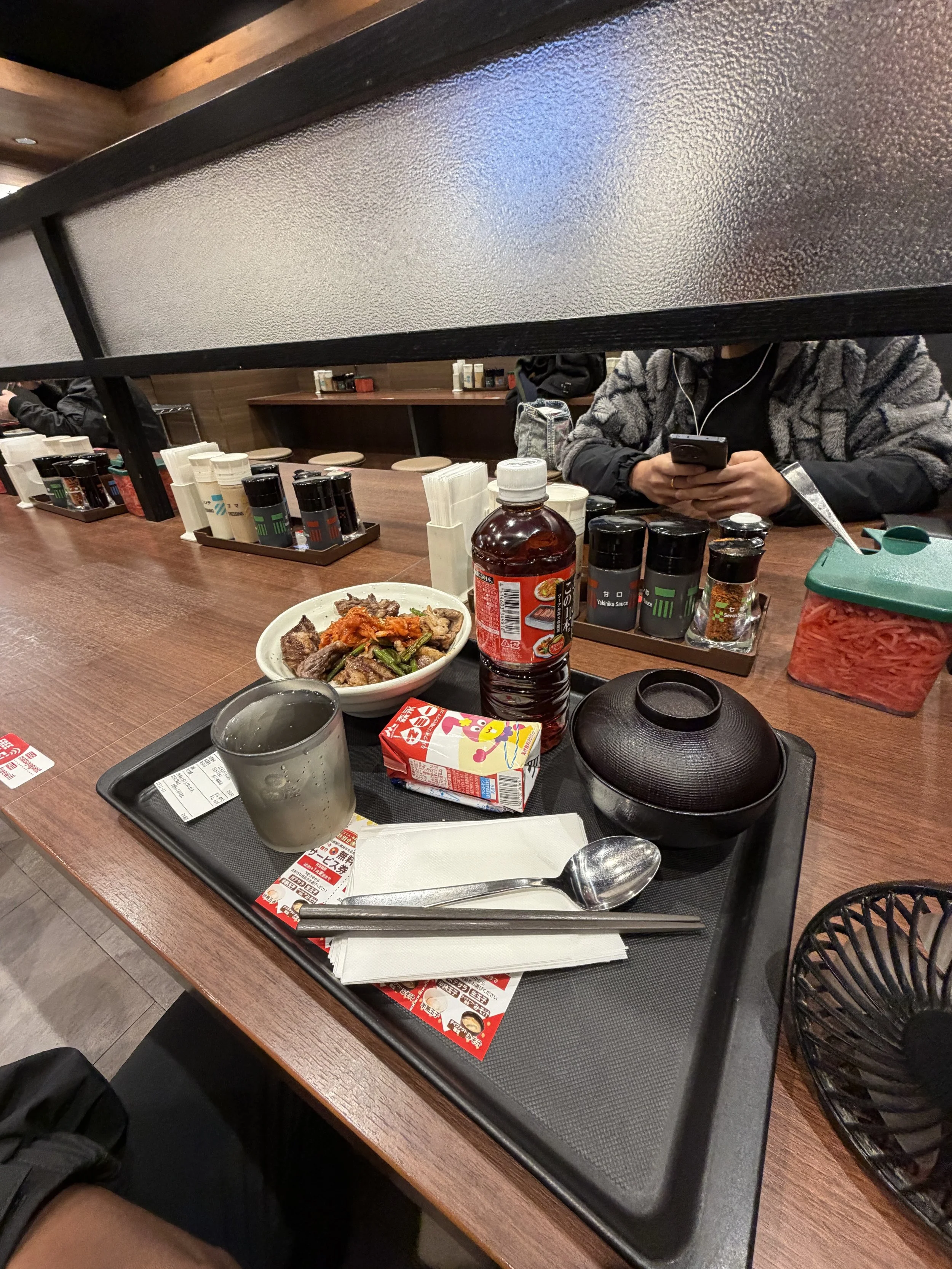
Eating in a Matsuya restaurant in Japan
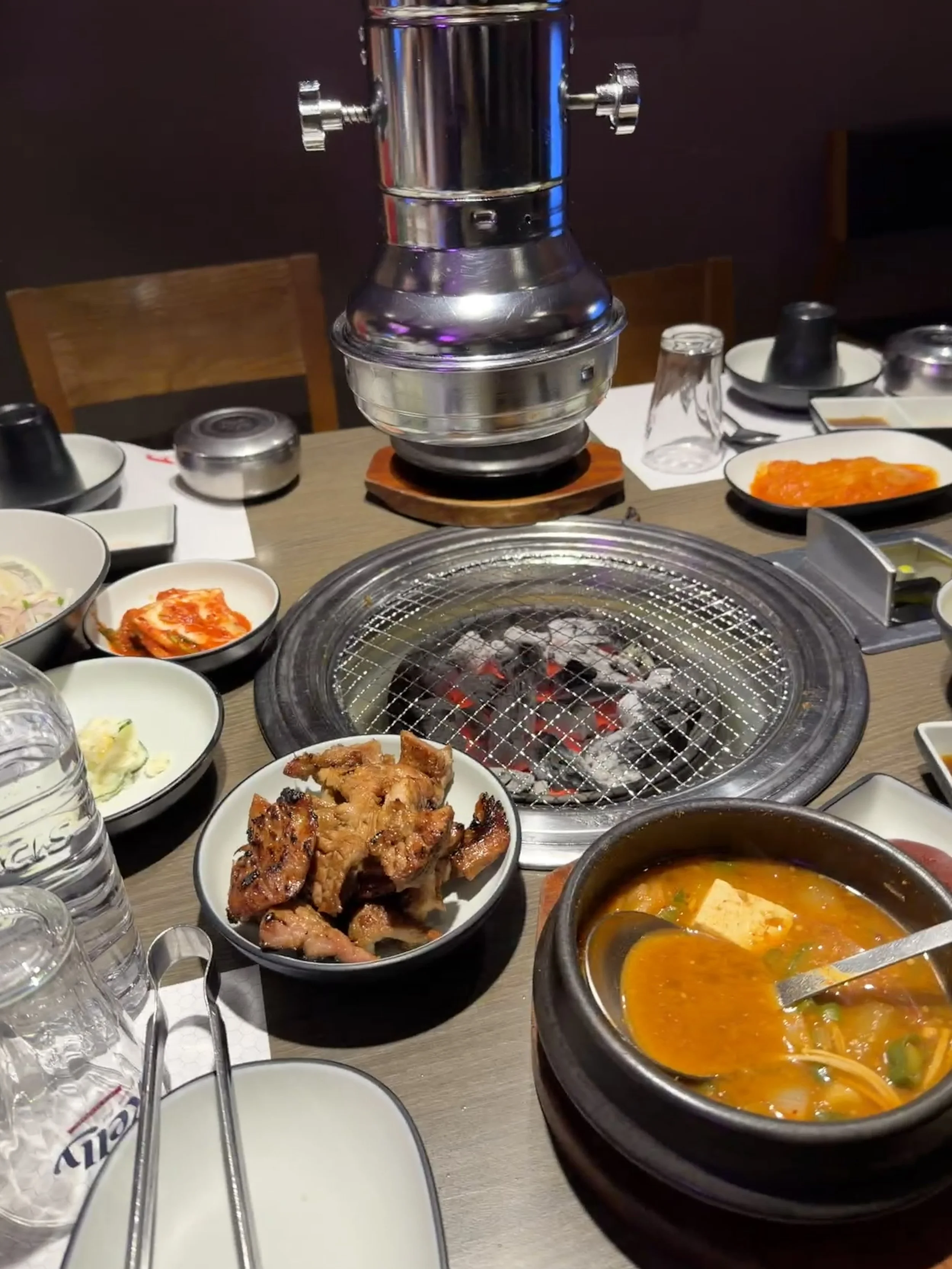
At a BBQ restaurant in South Korea
In Japan, many places are built for solo dining. Gyudon restaurants like Matsuya and Yoshinoya often have individual seating designed for quick, quiet meals. You’re expected to eat and leave, not linger and chat.
In South Korea, dining is more group-oriented. At many grilled meat (K-BBQ) restaurants, you’re often expected to order at least two portions, which can make solo dining a bit more complicated (and expensive).
In South Korea, there is also more interaction. Once, I went to a karaoke place and asked a worker where I could eat dinner. He actually walked me to a nearby BBQ restaurant and introduced me to the staff, explaining that I was practicing Korean and looking for good food—all while still on his shift.
Furthermore, in Japan, if you’re mindful of calories, they are usually listed on the back of packaging and written in Japanese. You’ll often need to translate or scan the QR code, which is frequently provided, to access the nutritional information. In South Korea, by contrast, calorie counts are typically displayed clearly on the front of packaging, making it much easier to track what you eat.
Transportation and Navigation
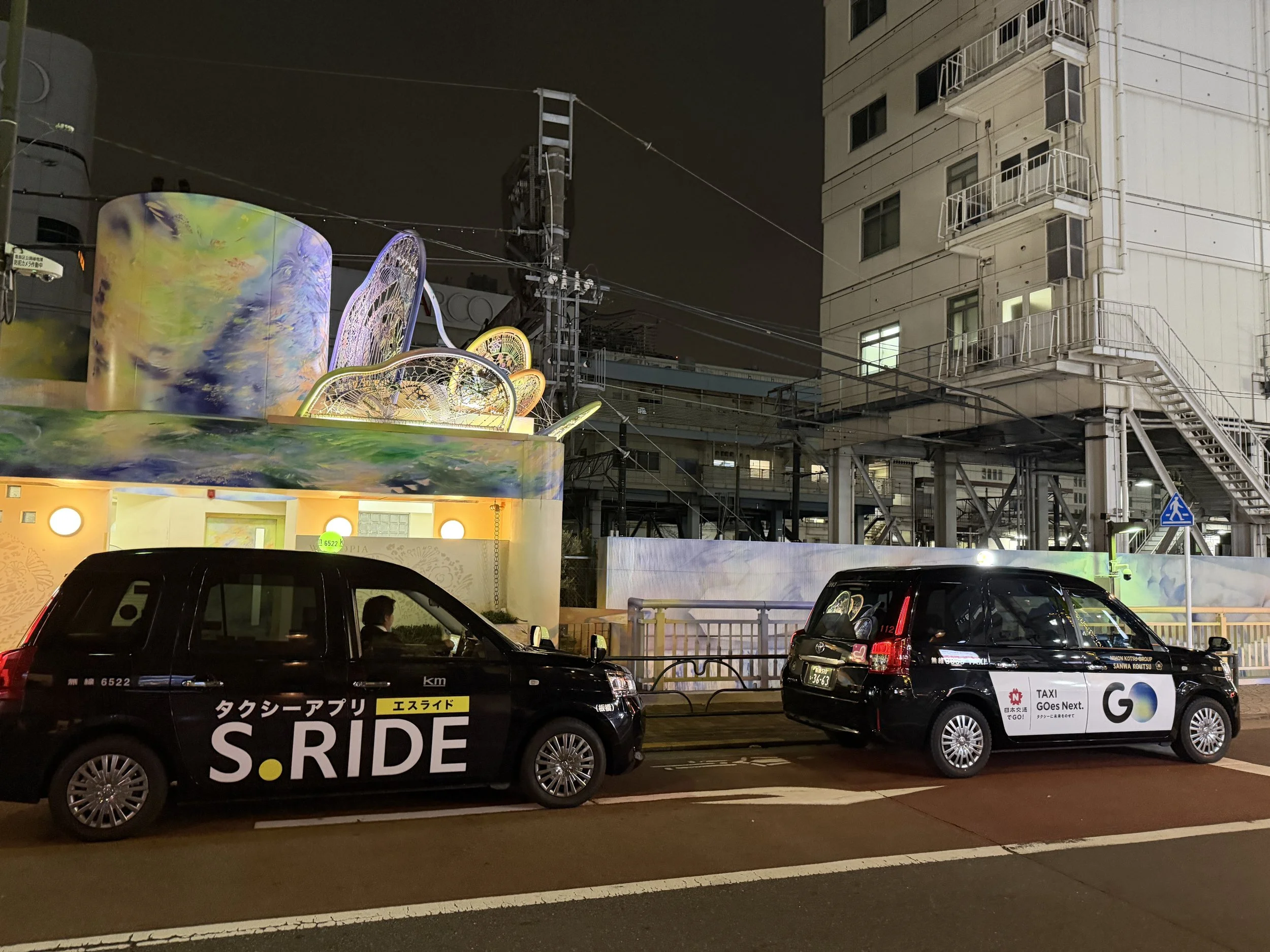
Taxis in Tokyo, Japan
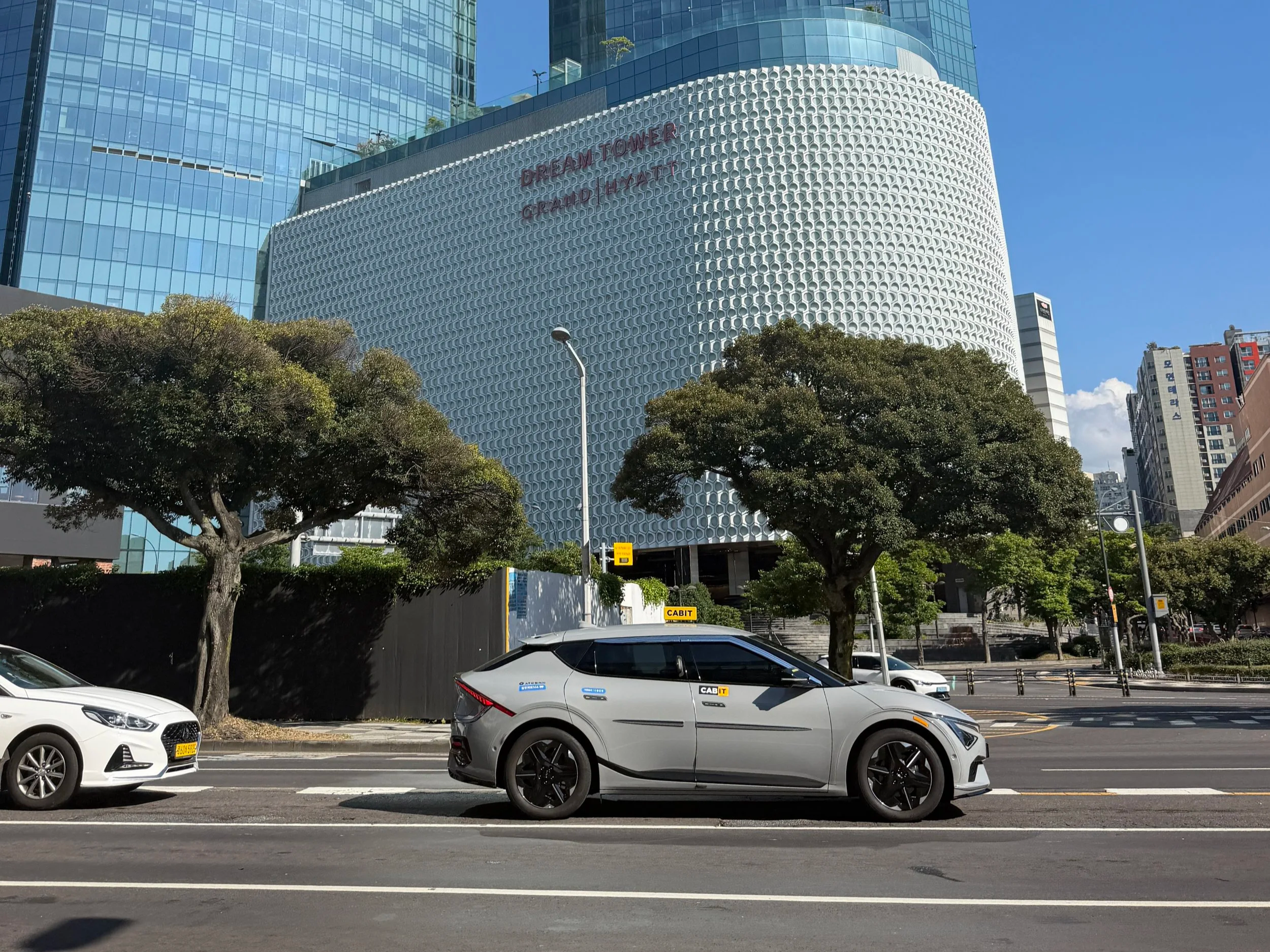
Taxis in Jeju City, South Korea
In Japan, trains and subways are extremely punctual and reliable. However, the system can be complex and confusing at first. Even though many people say it’s easy to navigate, it’s common to go the wrong way if you’re not paying close attention—sometimes this happens because certain lines loop or circle, meaning trains can travel in both directions along the same route.
Google Maps and Apple Maps generally work well, but the train line names on these apps don’t always match what’s displayed at the stations. To avoid confusion, try to rely more on the train line colours than the names/initials when navigating subways through these apps.
In South Korea, trains are also punctual but might have delays of a few minutes more often. The subway system is also easier to understand overall. Announcements are often made in multiple languages, including Korean, English, Mandarin, and Japanese. However, Google Maps and Apple Maps are not reliable for navigation. It’s much better to use apps like Naver Map and Kakao Maps.
Additionally, in Japan, specifically Tokyo, taxis such as Uber rides are incredibly expensive—think, $40 CAD for a 15 minute ride. In South Korea, a 15 minute ride might be around $12-15 CAD.
Side note: In Japan, apart from Uber, there is also the app called GO. In South Korea, they have Uber and also Kakao Taxi, but if you’re a foreigner without a Korean identification number, you should use K.ride in order to use Kakao Taxi (these taxis are often available much quicker than Uber taxis).
Fashion and Shopping
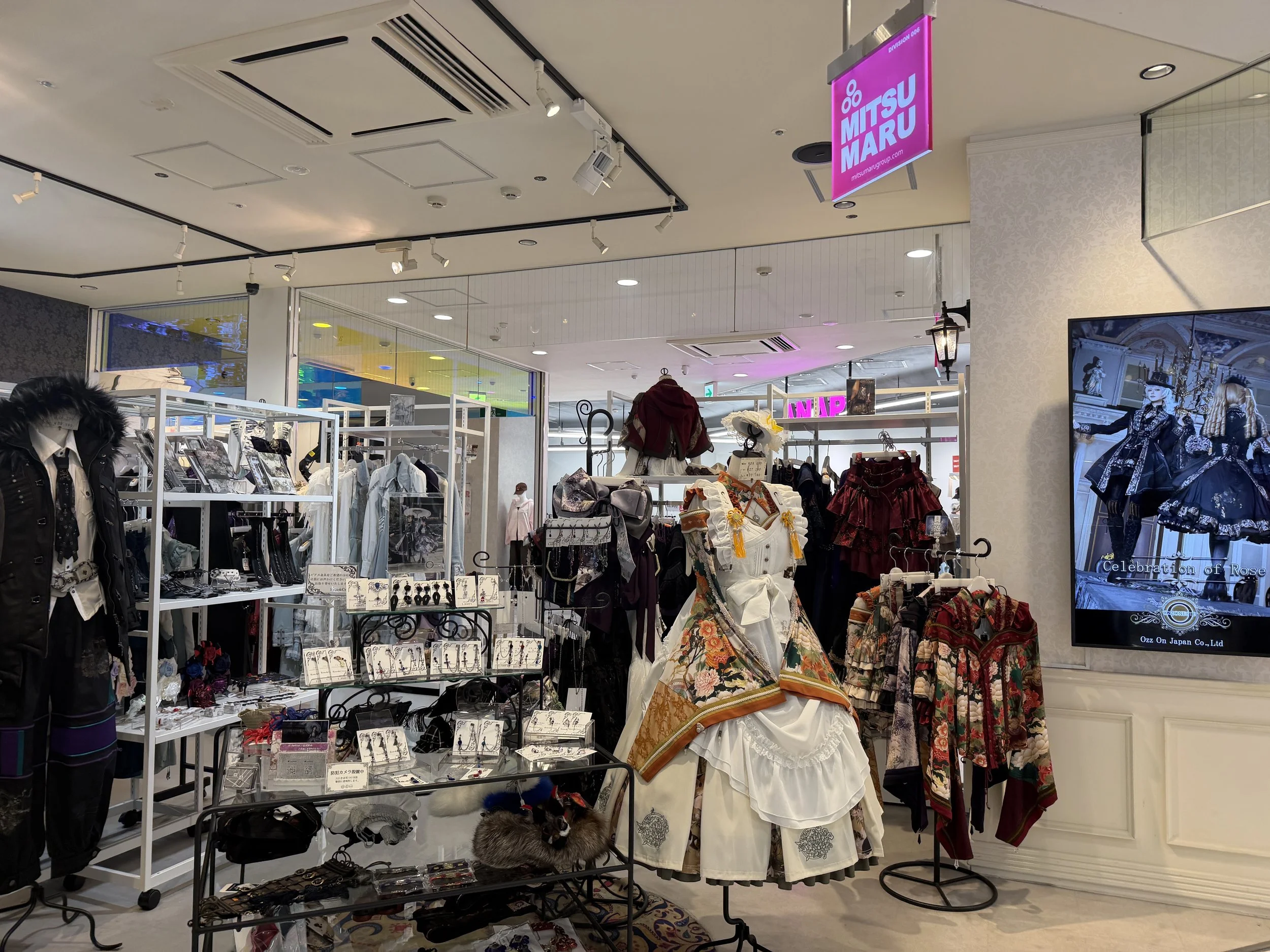
A clothing store in Shibuya, Tokyo, Japan
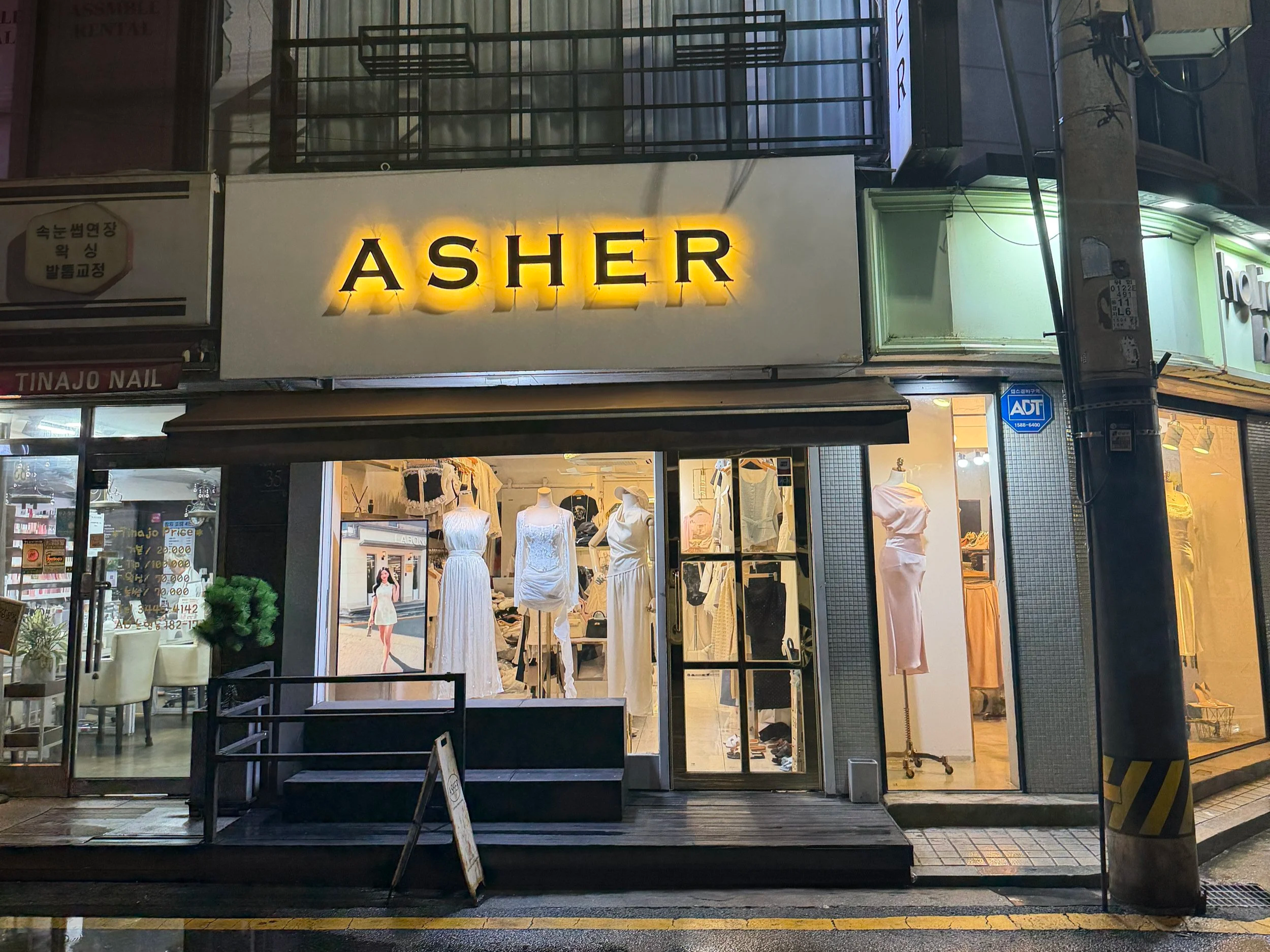
A clothing store in Gangnam, Seoul, South Korea
In Japan, fashion ranges from very experimental to very minimalist. Areas like Harajuku will have bold, unique styles, while other areas lean more towards simple, clean, neutral colours.
In South Korea, fashion is more trend-driven and often minimalist. You’ll notice a lot of neutral tones, especially black outfits, particularly among men. There is also a strong “service” culture in South Korea, where you often receive free extras (freebies). This can include extra food at street stalls or additional products when buying skincare, sometimes even advertised directly on the packaging.
Technology
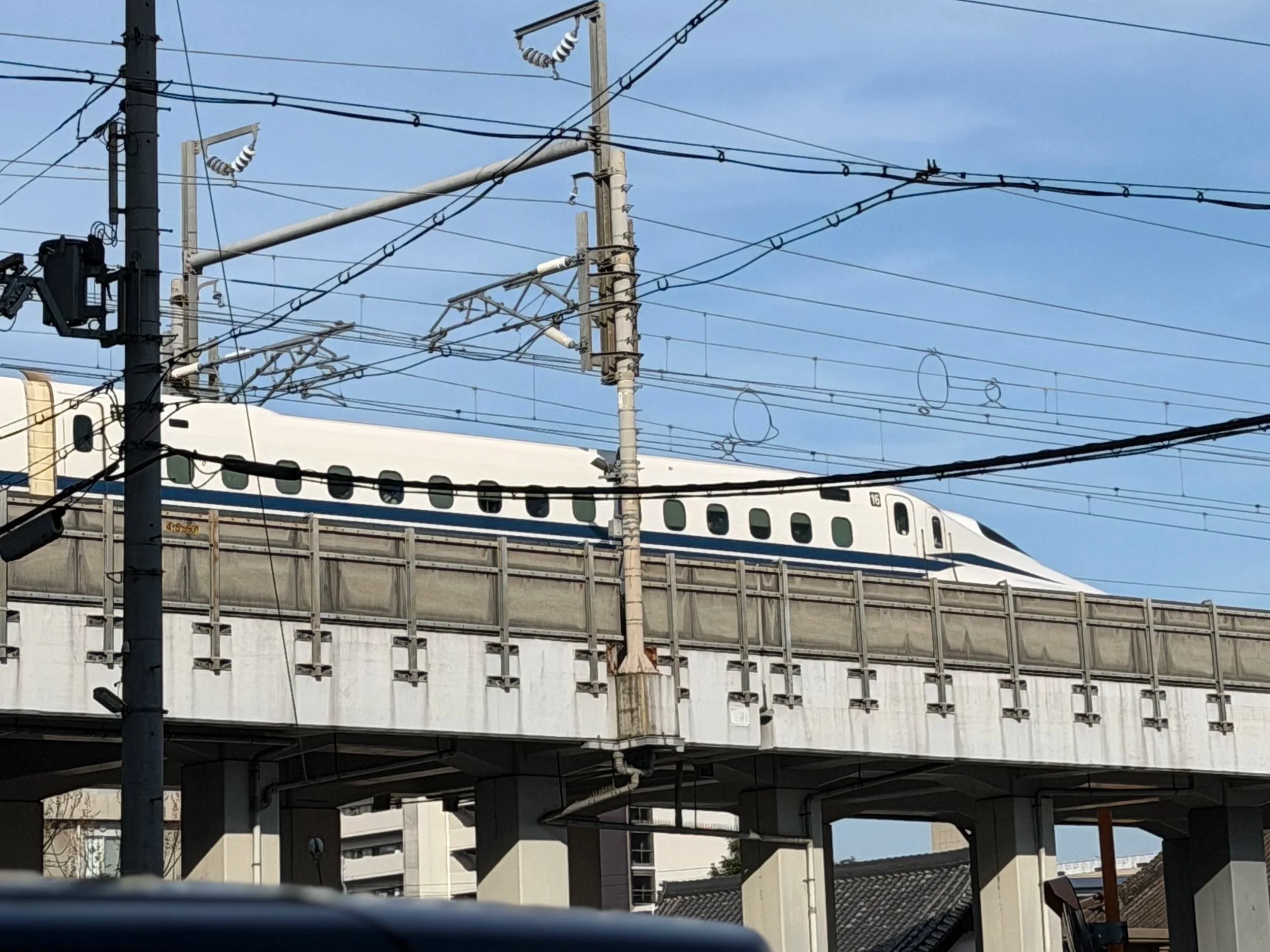
A Shinkansen high-speed bullet train in Japan
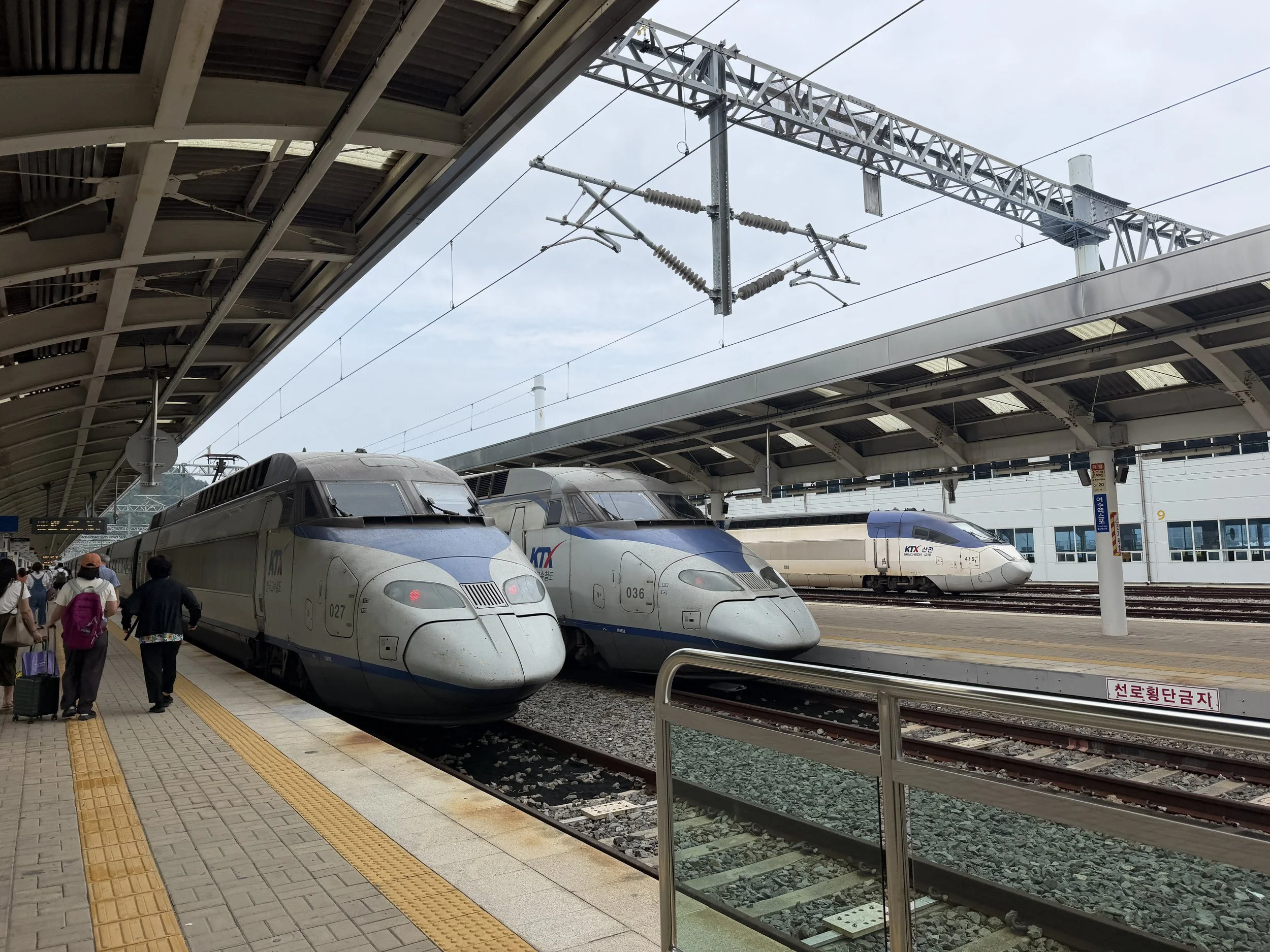
KTX high-speed rail trains in South Korea
While both Japan and South Korea have many similarities in technology, such as the high speed train (Shinkansen in Japan and KTX in South Korea) and bidet toilets, both countries have some significant differences in their technology.
In Japan, some technology can feel older or from a previous era. For example, in busy areas which use a lot of electricity (such as subway stations), you can sometimes hear an electrical buzz similar to older electronics like box televisions.
In South Korea, infrastructure feels more modern. For instance, almost all subway stations have glass wall barriers that only open when trains arrive, adding an extra layer of safety.
Additional Observations
In Japan, you drive on the left side of the road, while in South Korea, you drive on the right.
In Japan, eating habits and rules are more fixed, and people are less likely to make changes to meals, although they will try to accommodate you if possible. In South Korea, there is often more flexibility in everyday interactions and habits.
In Japan, tourist areas like Shinjuku and Shibuya can feel extremely crowded, especially around major stations. In South Korea, places like Myeongdong can also be busy, but overall it tends to feel slightly less crowded than Japan’s most popular areas.
Karaoke is also different. In Japan, you usually need to order food or another service to use karaoke rooms. In South Korea, you can simply pay per song or by time, and they often give extra time or songs for free (service culture).
Another noticeable difference is that in South Korea, spitting in public is much more common, especially among men and smokers, so be prepared to encounter this more frequently. In Japan, you will almost never see someone spit in public as this type of behaviour is rare.
Final Thoughts
Both Japan and South Korea are incredible destinations, but they offer very different experiences.
If you prefer structure, quiet, and independence, Japan may suit you more.
If you prefer energy, social interaction and a more dynamic social environment, South Korea may feel more natural.
For a first trip, though, Japan is a great introduction because it helps you adjust to cultural norms, making South Korea feel easier and more familiar afterward.
I visited Japan on a last-minute trip after South Korea and realized that I would have been much more open to Japan’s strict culture if I hadn’t already adjusted to South Korea’s way of life.
However, these are my opinion based on my own experiences. Everyone should have the chance to discover both countries on their own and decide how they feel about them.
Have you noticed any other similarities or differences between Japan and South Korea? Or did you travel to South Korea before Japan and prefer that order?
Share your thoughts in the comments!